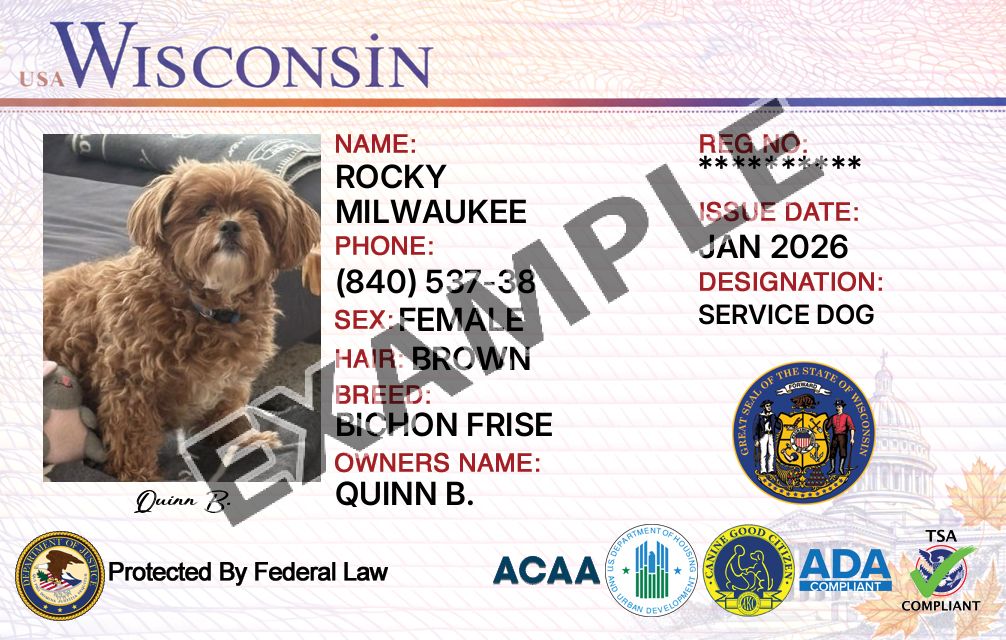
If you’re asking where do I register my dog in Milwaukee, Wisconsin for my service dog or emotional support dog, the key thing to know is this: in Milwaukee, “registering” usually means getting a dog license in Milwaukee, Wisconsin (a local government license tied to rabies vaccination), not filing a special service dog or emotional support animal registration.
In practice, most residents looking for where to register a dog in Milwaukee, Wisconsin will start with the local office that handles pet licensing and animal control for Milwaukee-area communities. Licensing rules are primarily local, and proof of a current rabies vaccination is commonly required.
Where to Register or License Your Dog in Milwaukee, Wisconsin
Because licensing and rabies enforcement are handled locally, the offices below are common starting points for an animal control dog license Milwaukee question. Contact the office that matches where you live (City of Milwaukee vs. nearby municipalities) and confirm current requirements and accepted submission methods before you go.
Milwaukee Area Domestic Animal Control Commission (MADACC)
The City of Milwaukee’s animal services information points residents to MADACC for dog and cat licensing and notes that dogs and cats over five months residing in the City of Milwaukee must be licensed annually. MADACC is also a core resource for animal control and rabies-related processes in the area.
City of Milwaukee — City Clerk, License Division
While pet licensing is commonly handled through animal services, the City Clerk’s License Division is an official City of Milwaukee licensing office and can help direct you to the right local process if you’re unsure which department is responsible for your address.
Overview of Dog Licensing in Milwaukee, Wisconsin
What a dog license is (and why it matters)
A dog license is a local government license that typically results in a tag number tied to you and your pet. In the City of Milwaukee, official guidance states that dogs (and cats) over five months old residing in the city must be licensed annually, and that being unlicensed can lead to citations. In many communities, licensing is closely connected to rabies compliance and animal control operations.
Rabies vaccination is a core requirement
Milwaukee-area licensing and redemption rules emphasize that dogs and cats five months of age and older must be current on rabies vaccination and licensing. In Wisconsin generally, rabies vaccination requirements apply based on age and timing, and “currently vaccinated” status depends on the vaccine label duration (for example, 1-year vs. 3-year products).
Service dog or ESA owners still license their dogs locally
Having a disability-related need for a service dog or an emotional support animal does not automatically replace local licensing rules. In other words, you may still need a regular dog license in Milwaukee, Wisconsin even if your dog is a service dog or ESA. The “special status” relates to where the animal is allowed and under what rules—not whether local licensing and rabies requirements apply.
How Dog Licensing Works Locally in Milwaukee, Wisconsin
Step 1: Confirm your jurisdiction (City vs. nearby municipality)
Milwaukee licensing is local. Start by confirming whether your residence is within the City of Milwaukee limits or in a nearby municipality. Even small differences in boundaries can change which office issues the license and what fees or renewal timelines apply.
Step 2: Make sure rabies vaccination is current
Expect to provide proof of a current rabies vaccination (certificate or veterinary record). Local guidance connected to Milwaukee-area animal services ties licensing to rabies vaccination status, and Wisconsin resources explain that a dog’s “currently vaccinated” status follows the vaccine label duration.
Step 3: Apply and pay the fee (then keep the tag accessible)
After you submit the application and pay the fee, you typically receive a license record and/or tag. Keep the tag on the dog’s collar when out in the community—especially because animal control and municipal enforcement may request proof of licensing if a dog is found at large, involved in an incident, or reclaimed from a shelter.
Step 4: Renew on time and update changes
Most licenses must be renewed periodically (often annually). If you move, change ownership, or update vaccination status, ask the licensing office what updates are required so your records stay accurate.
Service Dog Laws in Milwaukee, Wisconsin
A service dog is defined by training and disability-related tasks—not a registry
A service dog is generally understood as a dog trained to do work or perform tasks for a person with a disability. There is no universal government “service dog registration” that you must buy to make a dog a service animal. What matters is the dog’s training to perform disability-related tasks and the handler’s disability-related need.
Licensing and rabies rules still apply
Even if your dog is a service dog, local requirements like rabies vaccination and a local license can still apply. If you’re searching for where to register a dog in Milwaukee, Wisconsin because your dog is a service dog, you typically start with the same local licensing process as other residents (then comply with any additional rules for public behavior and control).
What businesses can ask (practical expectations)
In many settings, staff may ask limited questions to confirm the dog is a service animal (for example, whether it is required because of a disability and what tasks it is trained to perform). They generally should not demand medical details or require you to show a purchased “registry card.” However, local licensing tags and rabies compliance can still be relevant for municipal enforcement and animal control purposes.
Emotional Support Animal Rules in Milwaukee, Wisconsin
An ESA is not the same as a service dog
An emotional support animal (ESA) provides comfort that supports a disability-related need, but ESAs are not the same as service dogs under public-access rules. ESAs generally do not have the same right to enter places of public accommodation where pets are not allowed.
Where ESAs most often matter: housing
ESAs are most commonly addressed in housing contexts, where certain disability-related accommodations may apply. That accommodation question is separate from the local requirement to license your dog and keep rabies vaccination current.
You still typically need a local dog license
If your goal is to comply with local rules, an ESA letter (or other disability documentation) is not a substitute for a dog license in Milwaukee, Wisconsin. For animal control dog license Milwaukee needs, you’ll generally follow the local licensing process first, then separately address housing accommodation if needed.